Page Not Found
To be added.
A list of all the posts and pages found on the site. For you robots out there is an XML version available for digesting as well.
To be added.
Coming soon.
Welcome to my home page 😊
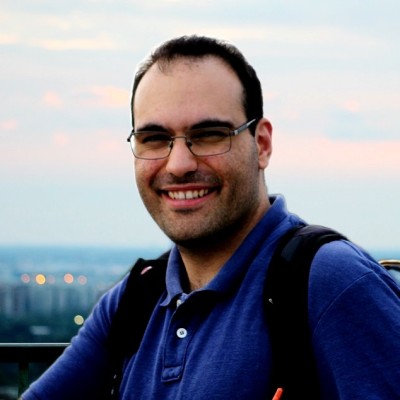
My name is Arian (Persian: آریان ) – you can also call me Ari. I am a researcher in Electrical and Computer Engineering. I received my M.Sc. in Computer Engineering (Artificial Intelligence and Robotics) from the Department of Computer Engineering, Amirkabir University of Technology (Tehran Polytechnic). I also received my B.Sc. in Computer Engineering (Computer Hardware) from the CSE & IT Department of Shiraz University. My doctoral research in Electrical and Computer Engineering at Concordia University has focused on reinforcement learning and restless bandit methods for scheduling, where I passed the PhD Comprehensive Examination in 2025.
I find great fulfillment in exploring the intersection of theoretical principles in machine and deep learning with their diverse applications. My master's research centered on statistical signal processing, specifically modeling space-time-frequency representations in image processing. I explored image decomposition techniques to uncover latent representations across new domains, coupled with the statistical analysis of the resulting coefficients. My research interests include statistical modeling, optimization, and reinforcement learning.
I am open to PhD positions in reinforcement learning, statistical signal processing, and image/medical image processing.




This is a page not in the menu. You can use markdown in this page.
Please visit my github, publications and projects pages.
Published:
The Whittle index is a powerful tool for solving scheduling problems where you have limited resources and many competing tasks — each with its own urgency and behavior over time.
Imagine you have a network of IoT sensors, and you can only query a few of them at each time step. Each sensor has a state (e.g., how fresh its data is), and that state evolves over time whether or not you pay attention to it. You want to maximize the quality of information you collect. Which sensors do you query?
This is the Restless Multi-Armed Bandit (RMAB) problem — “restless” because the arms (sensors) keep changing state even when not selected.
The RMAB is PSPACE-hard in general. An exact solution requires tracking the joint state of all arms, which grows exponentially. For real systems with hundreds of sensors, this is completely intractable.
Peter Whittle (1988) proposed a clever relaxation: instead of solving the joint problem, assign a scalar index to each arm based on its current state. At each time step, simply activate the arms with the highest indices.
The index for an arm in state $s$ is defined as the subsidy $\lambda$ at which the decision-maker is indifferent between activating and not activating that arm. Intuitively, a higher index means the arm is more “urgent” right now.
My doctoral research applied Whittle index scheduling to Age of Information (AoI) minimization in IoT networks — optimizing how fresh the information is across a fleet of sensors under transmission constraints. Our results were published at IEEE SmartIOT 2025.
This post is part of the Tutorials series — breaking down research concepts for a broad audience.
Published:
This post summarizes our paper published at IEEE SmartIOT 2025:
A Novel Whittle Index-Based Scheduling for Age of Information Minimization in IoT Networks
In IoT networks, keeping information fresh matters. A sensor reading that is 10 seconds old may be useless for real-time control. Age of Information (AoI) captures this freshness — it measures the time elapsed since the last successful update from a source.
The challenge: with many sensors and limited transmission slots, which sensors should you update at each time step to keep the overall network as fresh as possible?
We modeled this as a Restless Multi-Armed Bandit (RMAB) problem, where each sensor is an “arm” with an evolving AoI state. We derived a Whittle index policy — a lightweight, scalable scheduling rule that assigns a priority score to each sensor based on its current AoI.
Key contributions:
Our Whittle index policy significantly outperformed baseline round-robin scheduling and came close to the optimal policy computed by dynamic programming — at a fraction of the computational cost.
Full paper: IEEE SmartIOT 2025
This post is part of the Research series — plain-language summaries of my published work.
This is an item in your portfolio. It can be have images or nice text. If you name the file .md, it will be parsed as markdown. If you name the file .html, it will be parsed as HTML.
This is an item in your portfolio. It can be have images or nice text. If you name the file .md, it will be parsed as markdown. If you name the file .html, it will be parsed as HTML.
Published in Digital Signal Processing, 2020
[J1] A. Morteza and M. Amirmazlaghani, "A novel statistical approach for multiplicative speckle removal using t-locations scale and non-sub sampled shearlet transform," Digital Signal Processing , vol. 107, pp. 102857, 2020.
Published in Signal Processing, 2022
[J2] A. Morteza and M. Amirmazlaghani, "A Novel Gaussian-Copula modeling for image despeckling in the shearlet domain," Signal Processing, vol. 192, pp. 108340, 2022.
Published in IEEE Smart Internet of Things (SmartIoT), 2025
[C1] A. Morteza, D. Qiu, and Y. R. Shayan, "A Novel Whittle Index-Based Scheduling for Age of Information Minimization in IoT Networks," Proc. IEEE International Conference on Smart Internet of Things (SmartIoT), Sydney, Australia, pp. 184–190, 2025.
Published:
This is a description of your talk, which is a markdown files that can be all markdown-ified like any other post. Yay markdown!
Published:
This is a description of your tutorial, note the different field in type. This is a markdown files that can be all markdown-ified like any other post. Yay markdown!
Published:
This is a description of your talk, which is a markdown files that can be all markdown-ified like any other post. Yay markdown!
Published:
This is a description of your conference proceedings talk, note the different field in type. You can put anything in this field.
Teaching Assistant-Undergraduate course-Spring, Shiraz University, Dep. Computer Science, 2016
Teaching Assistant-Graduate course-Fall, Amirkabir University of Technology, Dep. Computer Engineering, 2019
Teaching Assistant-Graduate course-Spring, Amirkabir University of Technology, Dep. Computer Engineering, 2020
Teaching Assistant-Graduate course-Fall, Amirkabir University of Technology, Dep. Computer Engineering,2020, 2021
Teaching Assistant-Garduate course, Amirkabir University of Technology, Dep. Computer Engineering, 2018, 2021
Teaching Assistant-Undergarduate course, Concordia University, Dep. Computer Sience,2022, 2022
Teaching Assistant-Undergarduate course, Concordia University, Dep. Computer Sience,2023, 2023
Teaching Assistant-Undergraduate course, Concordia University, Shiraz University, Dep. Computer Science & Eng. Fall 2016, Fall 2023, Winter, 2024
Teaching Assistant-Undergarduate course, Comcordia University, Dep. Electrical and Computer Engineering,2023, 2024